
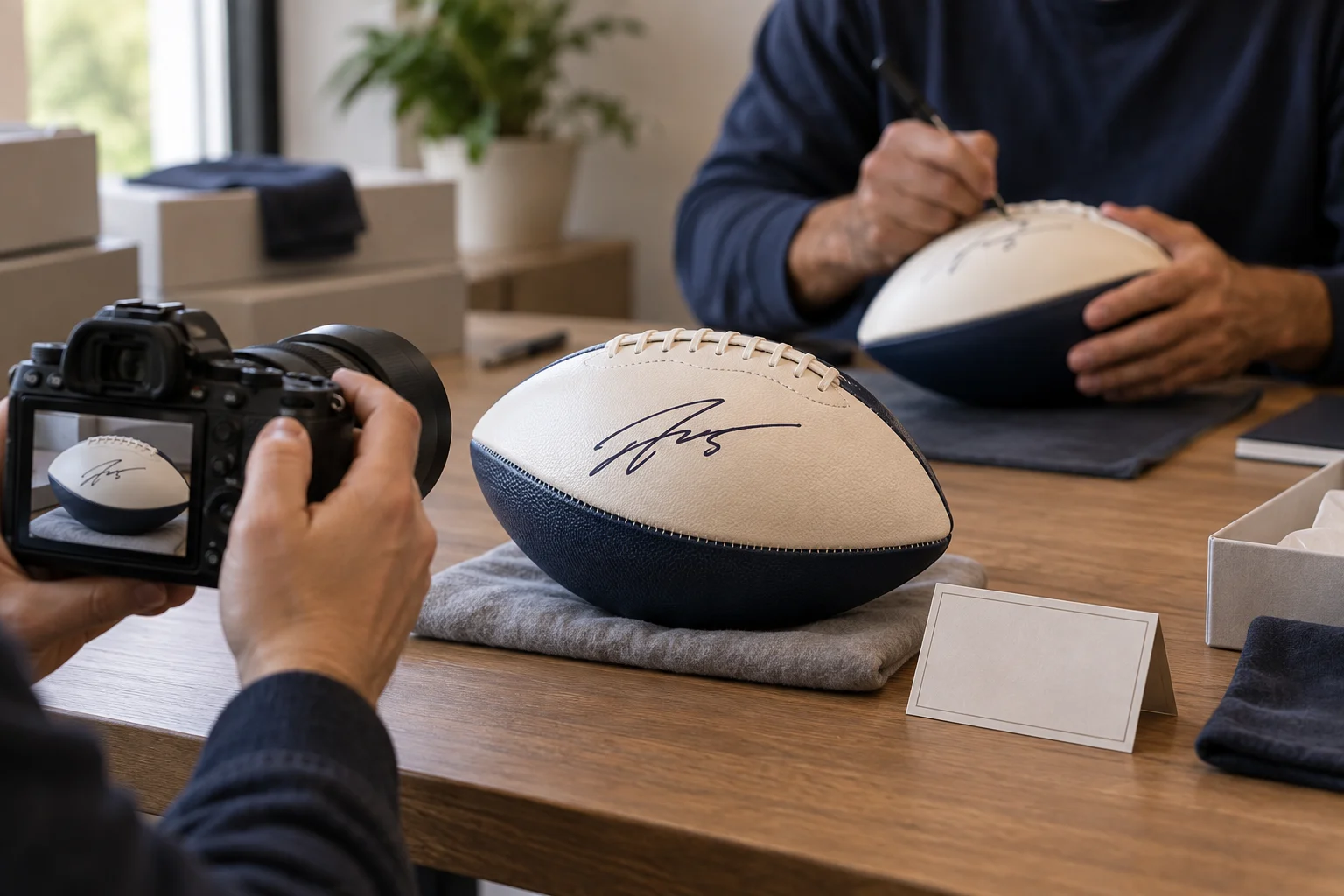
When a signed football arrives, the buyer may turn to its certificate to see who signed it, when and in whose presence. A photograph of that particular ball being signed gives them another piece of evidence to compare with their purchase.
For the business organising the signing, that evidence needs to be captured at the time. Once the balls are in their display cases and the photographs are framed, it is too late to go back and photograph the moment of signing.
Capture the evidence while each item is being signed
Witnesses and photography can be arranged alongside the signing itself. Record the date, location and who was present, and make sure the photographs let you identify each signed item.
A group photograph helps tell the story of the event. For a buyer checking their own football, a photograph that clearly shows that ball, its signature and its distinguishing features is more useful. Keep it with the item's reference number and signing details. The same material can then be used for certificates, product listings and customer enquiries.
For an existing collection, describe the origins you can establish. If an expert examined the autograph later, explain that assessment; if someone witnessed the signing, explain what they witnessed.
How Icons puts this into practice with a signed football
Icons lists TripleLock authentication on its Lionel Messi signed Trionda football. The product page explains that a phone tap on its encrypted NFC tag opens an authentication page supported by Crane Authentication.
In its official TripleLock explanation, Icons describes the evidence supplied for participating items: an individual signing photograph, the date and location, a certificate of authenticity and matching identifiers. Buyers can look at the photograph alongside the memorabilia in their hands.
Those photographs and details come from the seller's work at the signing. NFC makes them easier to find and check, but it cannot examine handwriting. Adding a tag cannot give an object of unknown origin a trustworthy signing history.
What buyers can see after an NFC tap
For your own collection, start with what a buyer wants to know. Take a limited-edition signed football: the page could show the tag verification result first, followed by the player's name, a photograph of the ball and its individual number.
Further down, the buyer could see photographs from the signing, its date and location, the certificate of authenticity and any special inscription. With BrandGuard's verification service, those materials can become a digital information page for the item. BrandGuard can create and host the page, using photographs, certificates and signing details supplied by the seller.
You can also use the page to tell the story of the event or the limited collection, and provide contact details for support. A buyer with a question can quote their item number when getting in touch. The content you want to share about your brand is then easy to reach from the memorabilia itself.
Let buyers get to know the business behind the autograph
Arranging the player's time, caring for the objects, and organising witnesses and photography all take work. Sharing that evidence alongside an introduction to your business helps buyers understand why they can place their trust in you. They also know who to contact if a question arises.
If the memorabilia is later given away or resold, its next holder can still consult the original release details. The seller needs to keep the page available. Recording subsequent sales or changes of ownership can be planned as a separate service, with a clear explanation of which details will be updated.
Plan the NFC tag and the page together
Once you know what you want to show, consider how buyers will reach the page from the object. BrandGuard can provide secure NFC labels, online verification and a hosted product information page together. If your brand already has its own product page, buyers can be directed there after successful tag verification.
When a buyer taps, BrandGuard checks the secure tag. Copying the printed design or an old verification URL cannot replace that check. Buyers can consider the result alongside the signing evidence supplied by the seller when looking into the item's origins. Our guide to anti-counterfeit label types and security levels explains the protection different labels offer.
The position and attachment need to suit the object. Balls, bats, photographs and frames have different requirements: a tag should be easy to read without covering the autograph or damaging the surface. Consider storage and display, how to discourage removal and reuse on another object, and how the tag, certificate and item will match.
To begin, send BrandGuard photographs and dimensions of the items, along with the signing and brand content you would like to share. We can discuss the label, its position and the page content, then check the arrangement with samples. That brings the practical decisions together, from where buyers tap to what they see afterwards.