
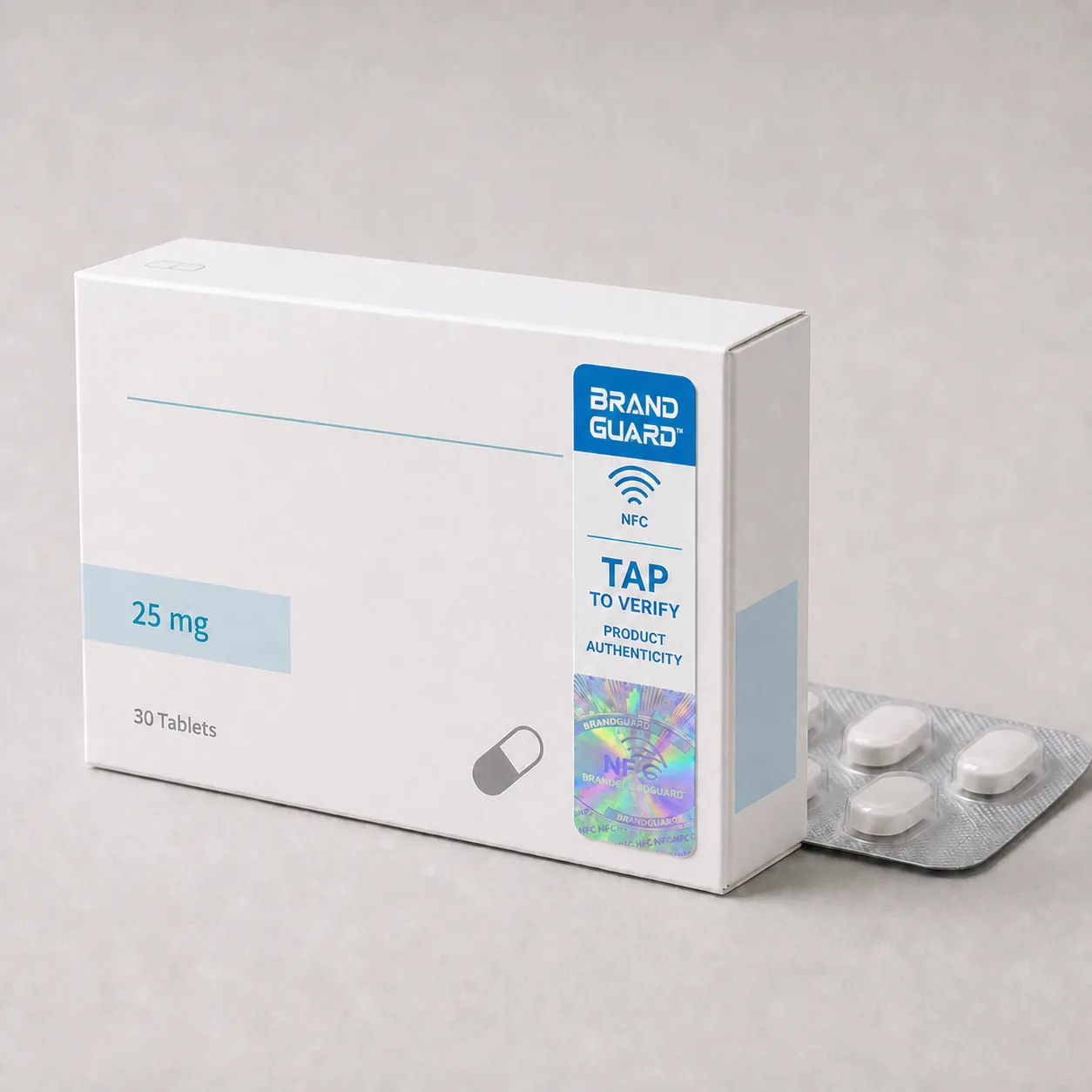
Tapping an NFC tag and seeing a familiar website can feel convincing. It is not, by itself, proof that the product is genuine. A web address is public information. It can be copied into another NFC tag, printed as a QR code or shared as an ordinary link.
Secure NFC product verification begins when the tap carries evidence that a copied URL cannot reproduce. The verification service must check that evidence, relate it to an approved identity and return a result for this interaction—not simply serve the same page to every visitor.
The important distinction: content access versus product verification
Both experiences may begin with the same action—a customer holds a phone near a tag—but the evidence behind the result is different.
A static NFC link
The tag stores a fixed destination. Any compatible tag can be programmed with the same destination, so reaching the page proves only that the phone read that address.
A verified NFC interaction
A secure chip contributes cryptographic data that changes between reads. The service evaluates the message, the approved item identity and relevant state before returning the current result.
What happens during one secure NFC tap?
The customer experience can remain simple and app-free, while the evidence path behind it performs several distinct jobs.
- 01
Tap the product
A compatible phone reads the NFC tag and opens the encoded web request in the browser.
- 02
Generate fresh evidence
The secure chip uses its protected credential and read context to calculate a new authentication message for this interaction.
- 03
Send the request
Secure Dynamic Messaging can place the required dynamic fields into a standard web address, allowing the browser to carry them to the verification service.
- 04
Evaluate the evidence
The service checks cryptographic integrity, the item relationship, read-counter context and—where supported and qualified—the seal-state signal.
- 05
Return a useful result
The customer sees the current verification outcome and, when appropriate, can continue to a brand-approved product record or digital experience.
What the public security technologies contribute
BrandGuard solutions can use NXP NTAG 424 DNA and NTAG 424 DNA TagTamper capabilities. The value is not the acronym itself, but the job each capability performs in the verification chain.
AES-128
A widely standardized cryptographic foundation used by the chip to calculate and protect authentication evidence. The secret credential is not exposed in the public URL.
AES-CMAC
A message authentication construction that lets the verifier detect whether protected message data is consistent with the credential held for the approved tag.
SDM and SUN
Secure Dynamic Messaging produces dynamic data within a normal NFC web interaction. NXP describes the resulting Secure Unique NFC authentication message as being generated on each read.
Read-counter context
A counter gives the verifier sequence context for evaluating reuse or replay. It is not a clock and should not be described as a timestamp.
What happens when someone copies the visible information?
Secure verification is useful because it separates information that is easy to copy from evidence that must be valid for the approved identity and interaction.
Copying the URL
A copied static destination may still open a page, but it does not create a new valid authentication message from the genuine credential.
Replaying an earlier request
A previously observed request can be evaluated against read-counter history and project policy. A valid-looking URL is not automatically accepted as a fresh interaction.
Moving a genuine tag
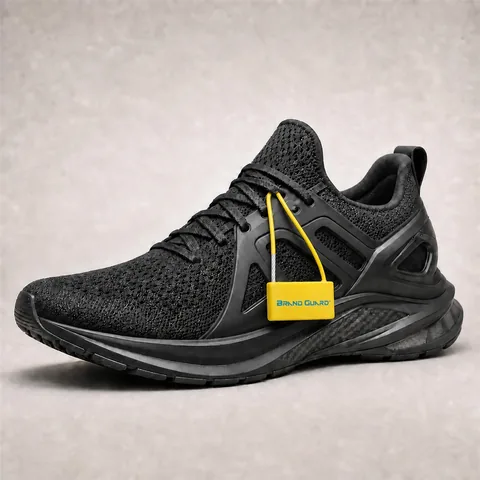
Cryptography cannot prove that a physically intact genuine tag is still attached to the original object. Destructible labels, qualified adhesives, closure paths and cable seals are used to make transfer harder or visible.
Why physical product integration remains part of security
A secure chip can establish cryptographic evidence. It cannot choose the correct antenna, adhesive, seal path, cable length or mounting position for the real product. Those decisions affect whether customers can read the tag reliably and whether removal, opening or reuse leaves meaningful evidence.
For closure applications, NTAG 424 DNA TagTamper can contribute a tamper-loop signal. That signal is valuable only when the loop, antenna and package opening path have been engineered and qualified together. BrandGuard therefore treats the finished installed construction—not the loose chip—as the unit that must be assessed.
Explore BrandGuard product forms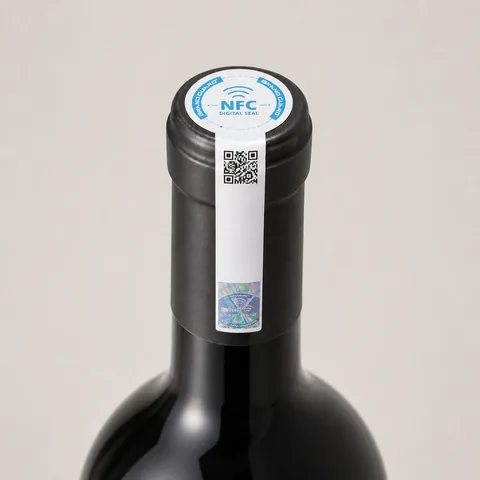
What BrandGuard adds beyond the chip
The chip provides published security capabilities. BrandGuard turns those capabilities into a product-ready responsibility chain.
Product engineering
Select the NFC form, antenna, materials and attachment or closure method around the product, operating environment and intended user interaction.
Controlled production
Manufacture the approved construction, apply the agreed secure profile and associate each encoded identity with its intended item record through a repeatable workflow.
Verification and support
Configure the customer result, support production transition and manage exceptions and credential lifecycle responsibilities within the agreed project scope.
Where secure NFC product verification can be used
- Product authentication and premium packaging
- Closure monitoring and one-time seals
- Garments, footwear and reusable objects
- Equipment cases, lockers and logistics applications
- Digital product passports and after-sales experiences
Frequently asked questions
Is NFC itself an anti-counterfeiting technology?
Not necessarily. A basic NFC tag may contain only a static identifier or URL. Anti-counterfeiting value depends on the secure chip profile, server-side verification, item relationship and physical integration used by the complete system.
Can an NFC link be copied?
Yes. A visible URL can be copied. Secure verification is designed so that copying the URL alone does not reproduce the fresh cryptographic evidence expected from the approved tag.
Does secure NFC verification require an app?
It does not have to. With a compatible phone and a correctly configured web-based NFC flow, the browser can carry the dynamic request to the verification service.
What does AES-128 protect?
It supports cryptographic authentication and secure messaging operations. It does not, by itself, stop someone from moving a genuine physical tag; that requires an appropriate product construction.
Can secure NFC report that a package has been opened?
A supported TagTamper profile can provide a seal-state signal when used with a correctly designed and qualified tamper loop. The claim should always be tied to the approved package construction.
This article describes public product capabilities and system principles. It intentionally excludes credentials, encoding parameters, verification thresholds, interfaces and deployment details.