
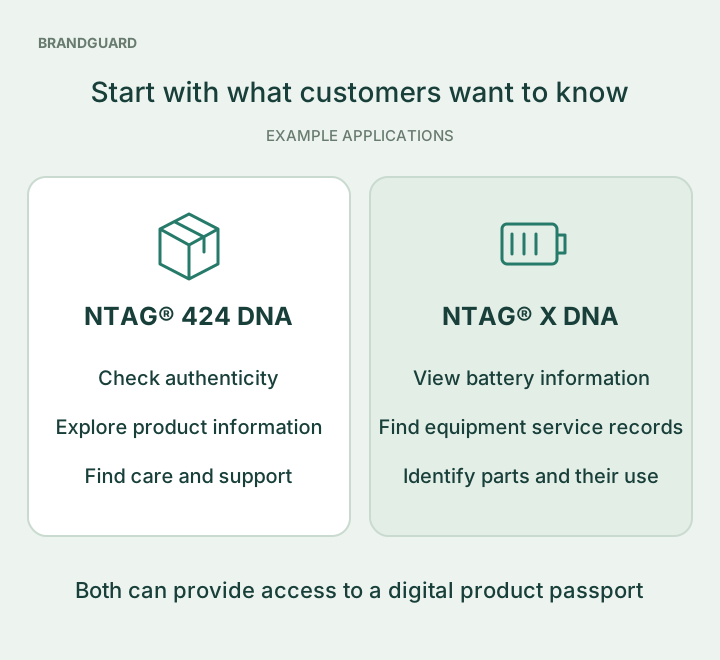
NXP® NTAG® 424 DNA and NTAG® X DNA are NFC chips with cryptographic authentication. In an anti-counterfeit label, either can work with a brand’s verification service to check the label’s identity when a customer taps with an NFC-enabled phone. The same experience can present the relevant product details, instructions and support information.
So if both can help protect products against counterfeiting, what makes one a better fit? The main differences are their authentication options, on-chip memory and ability to connect to electronics inside a product. A wine label used to check authenticity has different requirements from a battery whose temperature and remaining charge need to be checked.
A shared basis in authentication, with different possibilities
An ordinary NFC label can open a product webpage. These two secure chips also allow a verification service to check the label’s identity using cryptographic authentication. Copying a web address or printing a matching QR code does not reproduce that capability. A label designed to resist removal and transfer to another item also plays a part in product protection.
NTAG® 424 DNA supports AES-128 and suits authentication and information services built around a product label. NTAG® X DNA supports AES-128/256 and adds ECC public-key authentication and digital signatures, alongside more memory. This offers further choices for equipment, accessories and projects with different authentication requirements. Whether those features are useful depends on the job the chip needs to do.
For electronic products, I²C is a particularly useful distinction. This interface lets NTAG® X DNA connect to electronics inside the product, bringing information from the product into the NFC experience. A phone tap could then do more than identify a battery: it could also show temperature and remaining charge supplied by that battery.
NTAG® 424 DNA and NTAG® X DNA: specification comparison
These are chip-level specifications. The functions available in a finished label depend on the selected part, label construction and product requirements.
Swipe to view the full table
| Specification | NTAG® 424 DNA | NTAG® X DNA |
|---|---|---|
| Application cryptography and authentication | AES-128 | AES-128/256; ECC P-256 public-key authentication and digital signatures |
| Chip security certification | Common Criteria EAL4 | Common Criteria EAL6+ |
| NFC operating frequency | 13.56 MHz | 13.56 MHz |
| NFC standard | NFC Forum Type 4; ISO/IEC 14443-4 | NFC Forum Type 4; ISO/IEC 14443-4 |
| Standard NFC data rate | Up to 848 kbit/s | Up to 848 kbit/s |
| On-chip memory | 416 bytes of file memory | Up to 16 kB; available space depends on the part and configuration |
| I²C interface | Not available | Up to 1 MHz; requires a part and package with this interface |
| Power | Can operate from the NFC field, without a battery in the label | Can operate from the NFC field; also supports an external supply in connected products |
| Opening or tamper detection (TagTamper) | Not in the standard version; NTAG® 424 DNA TT is available for this requirement | Supported with an appropriate label or product design |
Memory here means data stored on the chip, and not all of it is available for product information. It does not set a limit on the content of a product webpage. If descriptions, pictures and support information are hosted on the brand’s website, 424 DNA’s smaller memory does not mean the customer has to receive less information.
The data rate is not a measure of how quickly a phone will open a webpage, either. A more useful distinction is whether the project only needs a product label, or also needs information from the product’s electronics. The latter is where I²C becomes especially relevant.
NTAG® 424 DNA: help customers understand and trust their purchase
For wine, cosmetics, clothing and collectibles, customers often have straightforward questions. Is this item genuine? Where does it come from? How do I use it, and who can help if something goes wrong? NTAG® 424 DNA suits an experience that brings product authentication and useful information together in a phone tap.
A customer tapping a skincare label, for example, could see a verification result for that item, instructions and a link to support. The brand can keep the page up to date, giving the label a purpose long after the sale.
If knowing whether a pack has been opened is also important, the TT version and a suitable seal can be assessed. For these projects, the priorities are easy reading, understandable results and a label that stays reliably associated with the product.
NTAG® X DNA: bring information from the product to a phone
Some products have more to share than a name, model and set of instructions. They may hold battery charge information, a recorded fault message or details of how a component has been used. NTAG® X DNA offers ways to bring that information into the NFC experience.
In a custom product, I²C provides the connection to the electronics that hold this information. The experience can therefore include details supplied by the equipment itself, as well as product information maintained by the brand.
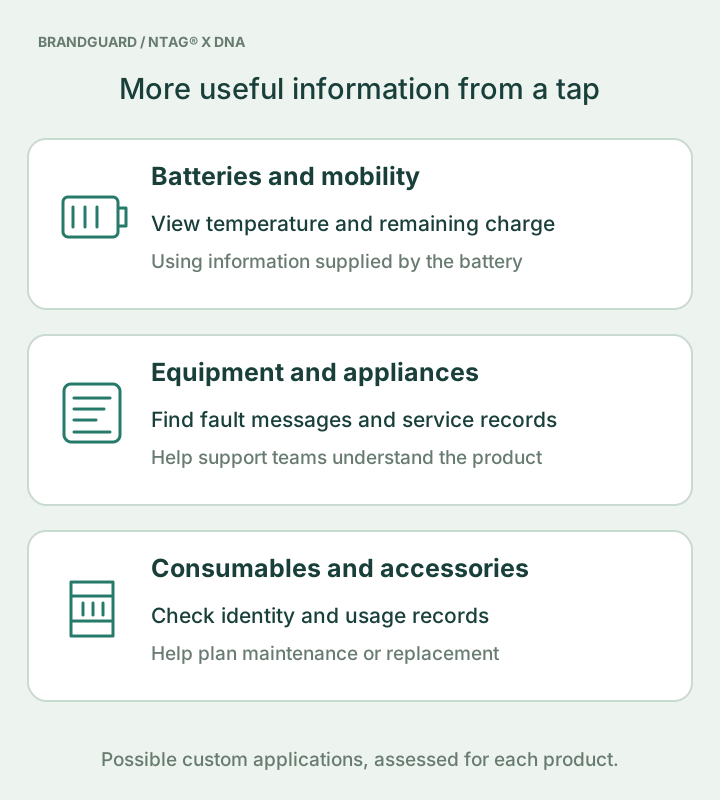
For an electric bicycle or power-tool battery, a custom project could use information already available from the battery’s management functions to show temperature and remaining charge to service staff. The battery supplies the readings; the NFC label provides a way to access them. Which readings can be shown, and how current they are, depends on the product.
Where else could this help?
Appliance servicing. Customers do not always know the exact model of a faulty appliance or how to describe the problem. Where the product can supply the information, an NFC experience could bring together its identity, fault messages and maintenance records, helping support teams get to the relevant details sooner.
Filters, printer consumables and replacement parts. A brand may want to confirm a part’s identity and help users understand when it needs attention. NTAG® X DNA can form part of a custom solution that combines the part’s information with usage records available from the equipment. Replacement advice can then reflect those records rather than just a general recommendation on the packaging.
Rental equipment and professional tools. During a handover, staff could tap to find an equipment number, service history and any usage information the product can provide. Both chips can be considered for access to product records. NTAG® X DNA becomes particularly relevant when the experience needs information from the equipment’s electronics as well.
Premium goods and collectibles. If the aim is to check authenticity, explain provenance and offer care services, NTAG® 424 DNA may already be a good fit. A product without electronics need not acquire additional functions simply to use a different chip.
Both can provide access to a digital product passport
A digital product passport, or DPP, helps keep relevant information accessible throughout a product’s life. An NFC tap can take a customer, repairer or recycling service to information about the particular item, including its materials, care and end-of-life options.
Either chip can provide this NFC point of access. Where the aim is to present product information maintained by the brand, NTAG® 424 DNA is worth assessing. If the passport should also draw on usage or condition information from an electronic product, NTAG® X DNA allows further possibilities for a custom solution.
A garment’s passport might focus on materials and washing instructions; a piece of equipment might also have a maintenance history. Decide who will use the information and what will help them before choosing the chip. The content and the service that keeps it updated are part of the project too.
Which chip suits which project?
If the intended experience is “tap to check the item, learn about it and find support”, start by assessing NTAG® 424 DNA. It is well suited to projects centred on product labels and packaging.
If it is “tap to identify the item and find out about this battery, machine or accessory”, with information coming from inside the product, take a closer look at NTAG® X DNA. It can also serve as an ordinary NFC label, but its connection to product electronics is especially useful in these applications.
Label size, appearance, placement, operating conditions and budget all matter. The specifications help narrow the options; the final choice should reflect the functions your customers and service teams will actually use.
Tell BrandGuard what you want the experience to achieve
You do not need to arrive with a technical specification. Start with the product, who will tap it, what they should see and the problem you want to solve. Product photographs, examples of use and expected quantities help us assess the options.
BrandGuard offers custom development based on NTAG® X DNA. We first discuss the detailed requirements, then agree the label format, functions and supporting services. If you are comparing the two chips, contact BrandGuard to talk through your product and the experience you want to provide.
Frequently asked questions
Do I need NTAG® X DNA just for customers to check authenticity?
Start by assessing NTAG® 424 DNA. If the main requirements are authenticity checks, product information and support, it may fit the project well. A need to connect with product electronics gives you another reason to consider NTAG® X DNA.
Will an NTAG® X DNA label show the temperature and charge of any battery?
That requires a solution developed for the particular battery. The battery must provide the relevant information, which the custom NFC experience makes accessible. Adding a label to an arbitrary battery does not make those readings appear automatically.
Can a product without electronics have a digital product passport?
Yes. Clothing, wine and other goods can use NFC to open product records, care instructions and recycling information. Either chip can provide access; choose around the content and services the project needs.
Can we discuss the idea before choosing a chip?
Yes. Describe your product, its users and the intended experience, and BrandGuard can help assess the options. Custom NTAG® X DNA development starts with a detailed requirements discussion before the scope and functions are agreed.