A worn corner, a printing variation or a higher grade can make a real difference to a trading card’s value. Buyers study photographs and look up certification numbers before committing. When they buy online, they also need to know that the card which arrives is the one they were shown.
That concern reaches well beyond one sport or one country. The market spans American basketball, baseball and football cards, as well as Japan’s Pokémon collections. The Japan Toy Association put the country’s card game and trading card market at about ¥302.5 billion in fiscal 2024. That figure uses suggested retail prices and excludes resales. eBay’s 2025 collecting report also highlighted interest in sports stars and Pokémon releases.
For businesses that sell or seal cards, a protective holder is only part of the job. A card may be displayed, posted and sold several times. At each sale, the next buyer needs to check that the record belongs to the card inside—and that nobody has disturbed the seal.
A genuine number can appear on a fake label
A certification number is a useful place to start, but finding it in a database does not prove that the card in front of you is genuine. PSA warns on its certification page that, although uncommon, genuine numbers taken from public sources have been used on counterfeit grading labels.
PSA’s buyer’s guide also describes counterfeit holders and signs of tampering. A buyer therefore needs to look at the card, the holder, its label and the seller, rather than rely on the number alone.
It also helps to know what kind of holder you are looking at. A rigid case or magnetic holder may simply protect a card during storage and display. A grading company’s sealed holder carries the result of its assessment. A similar-looking plastic case does not mean the card has been graded.
An authentication label brings its own question: can it be moved? If someone can peel a genuine label off intact and stick it onto another case, the label may still pass a check even though it is now attached to the wrong card.
A seal should not be reusable on another holder
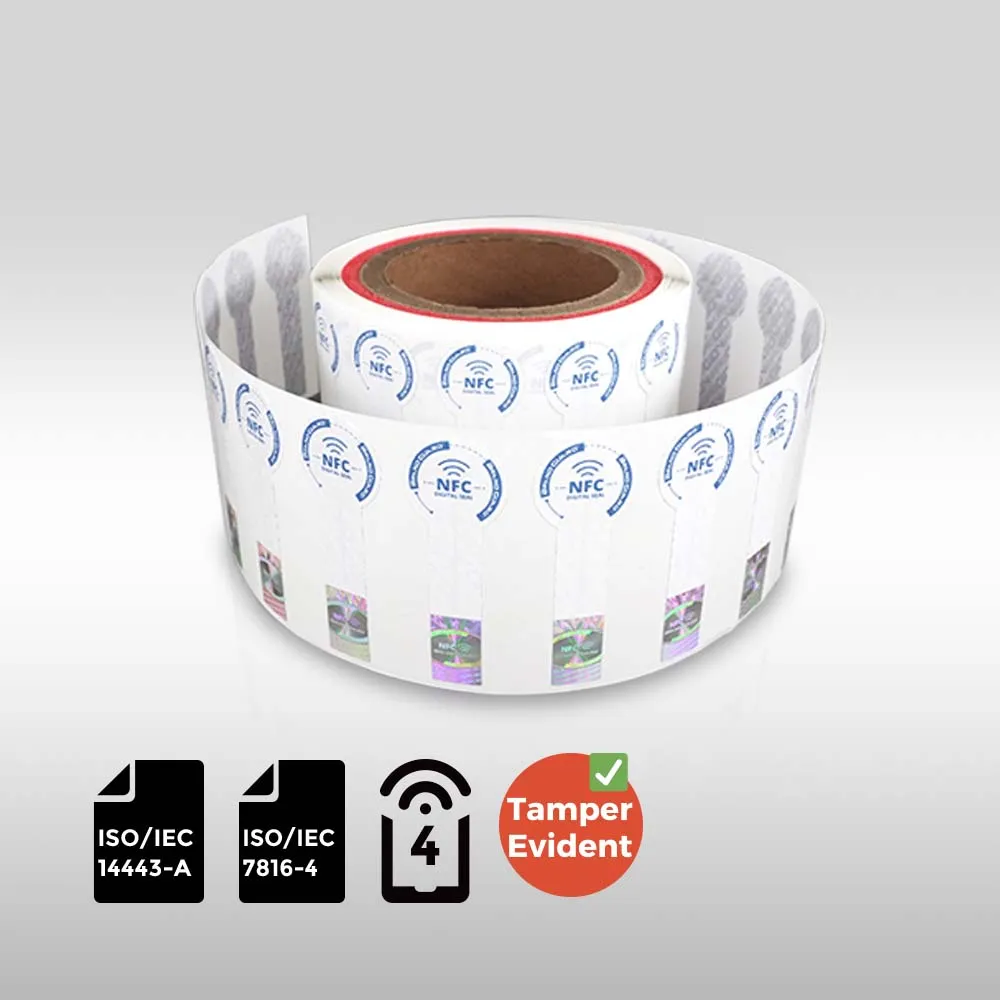
A seal using NXP® NTAG® 424 DNA TT can be designed to leave VOID marks on the holder and stop working when peeled off. The aim is straightforward: make removal visible and prevent the same NFC label from being used on another case.
The VOID marks show the next buyer that the label has been lifted. Making the removed label unreadable prevents someone using it again to make a different holder appear genuine. These two effects work together: one leaves a visible warning; the other stops reuse.
To achieve this, peeling must break the label’s fragile antenna or its connections. The label material, adhesive and case surface all affect what happens during removal, so the finished seal needs to be tested on the holder it will be used with.
Tap the label, then check the card
With the seal intact, a buyer can tap it with an NFC-enabled phone to open the seller’s or brand’s verification page. The page can show the label’s verification result alongside details of the card: its set, year, card number, photographs, and any grading or source information supplied by the service.
NXP® NTAG® 424 DNA TT uses cryptographic authentication, which allows a compatible verification service to check that the label is genuine. Copying its printed text, QR code or web address does not copy the chip’s ability to authenticate.
For the collector, the next step is simple: compare the page with the card and holder in hand. This is why the business setting up the record must match the right label to the right card from the start.
The NFC label does not judge the card’s printing, condition or grade. That remains the work of the relevant experts. It helps buyers check the label and view the card’s record; the physical seal helps prevent that label from being moved to another holder.
A tamper warning and a label that stops working are different
TagTamper can detect that a seal has been opened. If the label is designed to keep its NFC function after opening, a later phone tap can show the detected status on the verification page. Another option is to design the label so that peeling it off stops NFC reading altogether.
The choice matters. Once removal has made a label unreadable, tapping that same label cannot produce a new message saying it has been opened. The buyer can instead inspect the VOID marks and the damaged label.
Nor does a failed phone tap, on its own, mean the card is counterfeit. The instructions should explain how to try again, what to look for on the seal and when to contact the seller. A damaged label or a reading problem should not leave a genuine buyer guessing.
Design the seal around the holder
The holder’s size helps determine the label’s shape, but the way it opens tells you where to put the seal. The label needs to cross the opening it is meant to protect without hiding the card, grading label or certification number. Collectors buy cards to look at them, so this is a practical part of the design.
Magnetic holders, rigid cases and other sealed holders need to be assessed separately. Testing samples on the actual case shows how easily a phone reads the label, how it holds up during handling and shipping, and what happens when it is peeled off. A seal on an outer bag only protects the bag; it does not show whether the holder inside has been opened.
If a card is already sealed by a third-party grading company, agree any added label and how it will be applied with that company. When a holder is legitimately replaced or resealed, update the record so the next buyer can see which holder it refers to.
Try the generic label, then decide what you need
BrandGuard™ offers a generic NFC security label that brings these features together: NXP® NTAG® 424 DNA TT authentication, a hologram, VOID marks, a QR code and printed information. It uses a fragile printed antenna and destructible paper, so the label is designed to break during removal, leaving VOID marks mainly on the surface it was attached to.
You can use samples to try the phone experience, check the fit on your holder or packaging, and see what happens when you peel them off. If the size and performance suit your needs, you can use the generic version as it is. Testing may also help you decide what you want from a custom label—perhaps a different shape or antenna size, your own hologram and artwork, a customised QR code, or a particular response to removal.
You can buy the generic label to try it. To discuss a custom version, send BrandGuard™ photographs of your holder, its dimensions and material, and a description of how you want the seal to work. These details give us a starting point for a label designed around your card holder.