
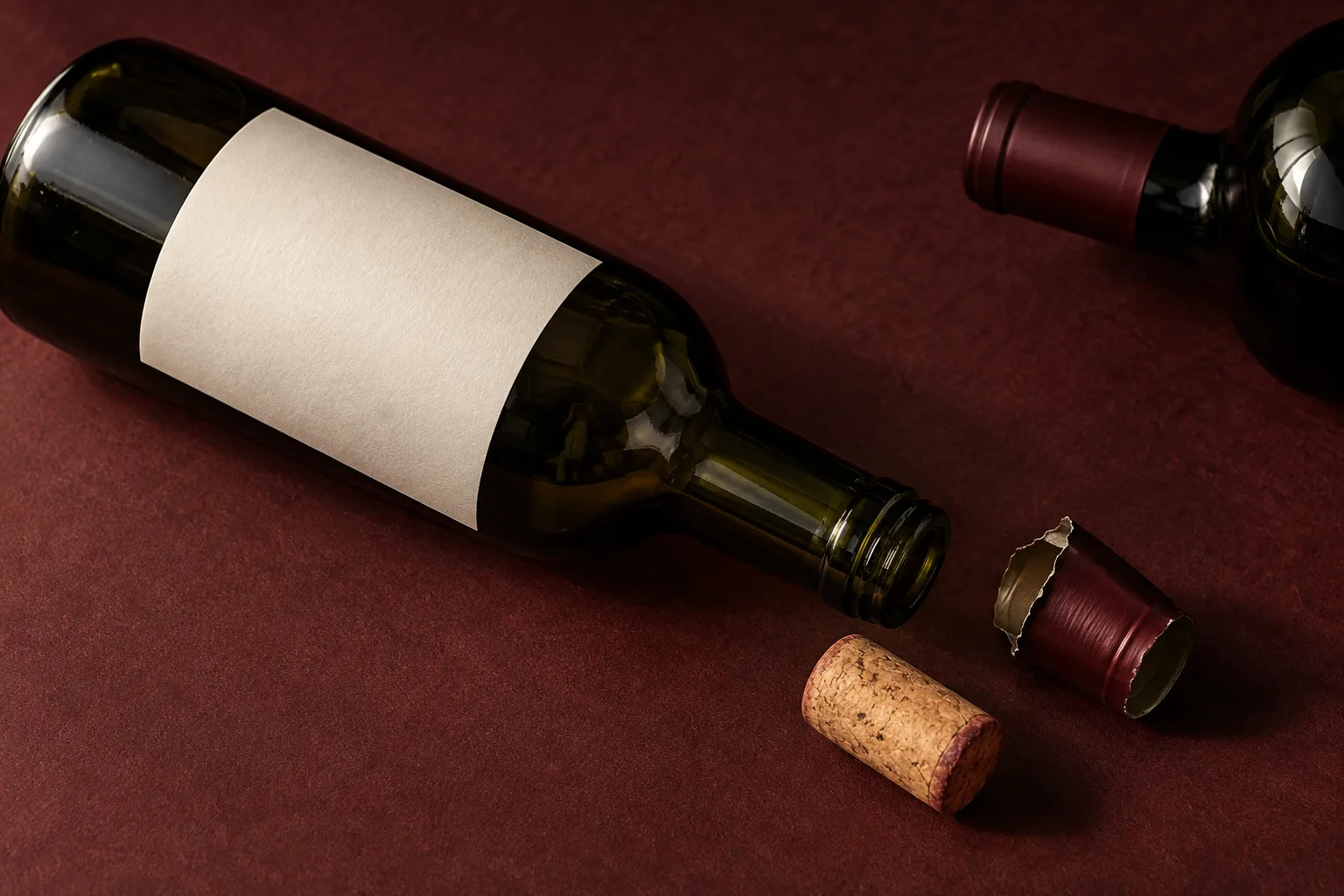
A winery's name stays on a bottle long after the wine has been drunk. If that bottle is refilled and sold again as the original wine, the packaging does some of the counterfeiter's work. A disappointed buyer may blame the name on the label, not realise that someone else supplied the contents.
For wineries and wine merchants, this is a different problem from spotting a badly printed fake. The aim is to give someone buying a sealed bottle better grounds to trust it: a secure identity linked to the producer's record, and a way to check the closure before opening. BrandGuard can bring those checks together through secure NFC, but neither should be presented as a test of the wine itself.
Sometimes the counterfeiter starts with your real bottle
In a case reported by Europol in June 2020, genuine empty bottles were collected from restaurants, filled with cheaper wine and resealed for sale. The original packaging helped carry the false claim.
A separate Europol operation reported in October 2024 involved counterfeit Grand Cru wines and equipment for recapping bottles. It illustrates a related difficulty: an apparently finished, sealed bottle can itself be part of the deception.
These cases establish a real method of fraud, not the percentage of wine affected or a figure for any winery's lost sales. The business concern is nevertheless clear. A buyer paying for a particular producer, vintage or release needs a reason to believe that the promise on the bottle still holds.
A genuine label is only part of the answer
An NFC wine label can serve several purposes. A basic tag might open the winery's website or a product page. That is useful information, but the same fixed link can be copied onto another tag. Reaching a real website does not, by itself, establish which bottle brought the customer there.
Secure NFC adds a check of the tag rather than merely displaying its stored address. With the correct setup, the chip supplies protected information for an online service to validate. This is part of the capability described in NXP's NTAG 424 DNA TT data sheet; it depends on proper configuration and genuine product records, not the NFC symbol alone.
Even a valid result has to answer the right question. A genuine tag still attached to a reused bottle may remain a genuine tag. If the protection does not involve the opening, authentication of the tag alone cannot establish that the original wine is still inside. The record must belong to the right product, and the packaging must make reuse harder to conceal.
The closure is where bottle reuse changes the problem
BrandGuard's tamper-detecting NFC closure seal is designed across the part of the packaging that must be disturbed to open it. It uses NTAG 424 DNA TT to combine a secure identity with a detectable change at the seal. This makes it possible to show identity verification and seal status as separate information.
That distinction matters before purchase. A bottle offered as unopened should not be treated the same way as one whose seal has registered a break. After the buyer opens it normally, however, an opened indication is expected; it does not turn genuine wine into counterfeit wine.
The seal has to protect the actual closure, not just decorate the neck. If a decorative sleeve can be removed with the seal intact, it offers little help against that route of reuse. The attachment also needs to resist intact removal and transfer. NXP's TagTamper application guidance explains why the physical construction is part of the protection.
An opening detected during a powered NFC read can be retained in the tag. This is not continuous surveillance, and physical design still matters between reads, as NXP explains. For the customer, the practical point is simple: it adds evidence about the protected seal, not a guarantee against every way of accessing or replacing the contents.
Give the buyer an answer before the cork comes out
A buyer checking a sealed bottle could tap the marked area with a compatible NFC phone to open the brand's verification page. The page could pair identity and seal results with details such as the producer, wine, vintage and bottle size, ready to compare with the bottle.
The identity result and seal status should be clear and separate. An opening warning on a bottle sold as unopened is a reason to pause and ask the seller or brand to investigate.
If the tag cannot be read or the check cannot be completed, provide a clear support route. Phone positioning, damage or a connection problem may interrupt the process; they are not proof of counterfeiting. A failed identity check should be referred to the seller or brand for investigation. Likewise, the fact that a bottle has been checked before is not proof it has been refilled: merchants and customers may legitimately check it more than once.
A useful wine authentication page therefore does more than display a reassuring tick. It helps a buyer decide whether to proceed, ask a question or seek help, while making clear which brand stands behind the answer.
Opening the bottle should change the message, not erase the brand
Once a customer has opened the bottle, authentication has served one purpose, but the connection to the winery can remain useful. Where the tag stays readable by design, the same destination can offer serving suggestions, the story of the wine or a route back to the producer. Those services should follow the check, not obscure an opening warning.
For a winery, the important boundary is that ordinary consumer reuse should not make an opened bottle look factory-sealed again. Replacing a capsule or attaching a new label must not be accepted as a fresh producer-issued identity without the producer's controlled process.
Authorised refilling or reconditioning needs a clear record of what was done and when. Buyers should be able to distinguish a producer-approved service from the bottle's original unopened condition.
Collectible older wines need particular care too. Adding NFC today cannot reconstruct years of provenance. The merchant's assessment and supporting history remain essential; a new tag can connect a record to the bottle, not establish an undocumented past.
Make your name harder to borrow
For a winery releasing a new vintage, or a spirits brand considering a new closure, the opportunity is to make its promise easier to check and harder to reuse. The most useful starting point is a specific bottle and sales situation: a sealed bottle at retail, an online order at delivery, or a bottle presented before restaurant service.
BrandGuard can combine physical protection tailored to the bottle, secure encoding and online verification. The seal can carry the brand's design, with its attachment and NFC performance assessed on filled bottles under expected handling conditions.
Buyers gain evidence from the brand alongside the familiar bottle, label and seller's assurance. Wineries gain a direct way to answer those buyers and help make authentic packaging harder to misuse. This complements trusted distribution and packaging controls; it does not assess the wine's composition, storage or drinking safety.
Questions about NFC wine authentication
Can a genuine wine bottle contain counterfeit wine?
Yes. Reusing genuine bottles for different wine is a documented form of fraud. A genuine bottle or label is not enough to establish that its contents are the wine originally supplied by the producer. This does not mean every reused or refilled bottle is fraudulent; authorised refills must be represented accurately.
Will any NFC wine label provide anti-counterfeit protection?
No. A tag that only opens a fixed website address provides access to information. Secure authentication also validates protected tag information against a trusted service and product record. To address bottle reuse, that identity needs appropriate physical protection at the closure.
Does an opened-seal result mean the wine is fake?
No. It can follow normal opening or damage. It matters especially when a bottle is being offered as unopened. The buyer needs an explanation and a route to the seller or brand for investigation, not an automatic counterfeit verdict.
Can an NFC seal tell whether the wine inside has been replaced?
Not directly. It can provide evidence about the identity and protected seal. It does not analyse the wine or guarantee that every method of accessing the contents will be detected.
Can NFC replace provenance checks for older collectible wines?
No. A label fitted now cannot verify the bottle's entire past. Historical records and specialist assessment remain necessary. NFC can help keep the resulting record connected to the bottle; it cannot create missing evidence.
Sources and technical references
- Europol — genuine wine bottles refilled and sold online, 30 June 2020
- Europol — counterfeit Grand Cru wine operation, 15 October 2024
- NXP — NTAG 424 DNA TT data sheet
- NXP — TagTamper physical design guidance, AN11941
- NXP — NTAG 424 DNA / TagTamper features and hints, AN12196
Reviewed on 9 September 2026. The cases above are independent law-enforcement reports, not BrandGuard customer projects. Proposed verification screens and workflows require agreement for the actual bottle and brand.