
A fan choosing an official football shirt is buying more than colours, a crest and a player's number. They want the real thing: a shirt recognised by the club they support. But when two shirts look alike and both sellers promise authenticity, what gives them a reason to trust one over the other?
That question matters to clubs, licensed sportswear brands and specialist shirt retailers alike. BrandGuard secure NFC can give a shirt a checkable identity, rather than leaving authenticity as a claim on a product page. Once the fan has checked it, the same shirt can bring them back to the brand, the shop and the services behind their purchase.
Counterfeits compete with the business behind the badge
A counterfeit seller benefits from demand that a club and its partners have built, without participating in the licensed merchandise business. For a genuine retailer, it creates another problem: having to justify the price of a legitimate shirt against something presented as the same product.
The scale is not hypothetical. In August 2025, City of London Police reported that coordinated operations had seized 67,573 fake football shirts and kits since January. That is a seizure total, not a measure of clubs' lost sales.
Not everyone knowingly buying a cheap fake would otherwise buy an official shirt. Authentication is especially relevant to the fan who does want genuine merchandise but cannot confidently tell which offer to trust. Helping that customer distinguish the genuine product is a practical reason for a club or retailer to invest in BrandGuard.
Let the fan check the shirt, not just read another promise
For a shirt issued with BrandGuard, the intended experience is straightforward: bring a compatible NFC phone to the badge, open the verification page and see the result alongside the registered shirt details. A season, style, colour or edition can help the fan compare the record with the garment in front of them.
The important change is who supplies the evidence. The fan is no longer relying only on a seller's photograph or the appearance of the crest. The verification service checks the secure tag associated with the product. The page should also make clear which club, brand or retailer stands behind that record.
In a shop, that check can support the buying decision. For an online order, it can help the customer examine the shirt they actually received. If a check cannot be completed, the page should offer help—not leave the fan to interpret an error as proof of a fake.
A counterfeiter can copy the design. That is not the same as copying the check.
Printing a crest or reproducing a badge's shape does not reproduce the security inside it. BrandGuard's heat-applied NFC garment badge uses NTAG 424 DNA as its reference chip. With the correct configuration and verification service, it provides changing, cryptographically protected information for the service to check. NXP documents this capability.
An ordinary NFC tag may simply open a fixed web address. That address can be copied. So can the appearance of a verification page. Secure authentication adds a check that copying a logo, a static link or a screenshot alone cannot reproduce. Fans should reach the brand's recognised verification destination, not trust any page that displays a green tick.
This is why the badge must belong to the right shirt from the start and be attached in a way that discourages intact removal and reuse. A genuine tag moved onto a fake shirt is a different problem from copying its electronics. BrandGuard brings physical protection, secure encoding and online verification together; no single chip can make every kind of fraud impossible.
The shop selling the shirt has a brand to protect too
A specialist football shirt website may have spent years building a reputation for selling genuine merchandise. After a sale, however, the customer may remember the shirt far more clearly than the shop. A branded authentication experience gives the retailer a useful reason to remain part of that purchase.
The badge and the page it opens can carry the retailer's identity, with product information and a clear route back to support or the store. Instead of saying 'trust us' once at checkout, the business gives the customer somewhere to return when they want to check a record, ask a question or buy again.
That promise needs to be specific. A retailer's record can identify an item it has checked and sold; it does not, by itself, establish authorisation from a club. For previously owned or collectible shirts, the quality of the retailer's authentication and provenance work remains essential. NFC can keep that record connected to the item, not invent its history.
Once trust is established, give the fan a reason to come back
A fan who has just confirmed their shirt is a natural audience for the story behind it: the season, the design or an anniversary it marks. A club might link to its own content or a supporters' programme. A shirt retailer might offer care advice, collection information or access to its next release. These follow on from the product the fan chose, rather than interrupting the authenticity check with a promotion.
This is already a commercial use of NFC. MatchWornShirt describes using Fabricks to connect shirts to digital authenticity certificates, athlete and event information, and additional content. It is an industry example, not a BrandGuard customer or evidence that the two systems use the same security design.
For your own programme, the page can lead to an official social account, a club invitation or a retailer's community. Those destinations and any membership benefits need to be agreed and maintained. A tap is an opportunity to earn another visit, not an automatic follower or sale. Keep verification available without requiring a marketing sign-up.
Make it part of the shirt's identity
A swing ticket is usually removed before a shirt is worn. A discreet NFC badge can remain with the garment, so the brand's identity and the route back to it are not discarded with the packaging.
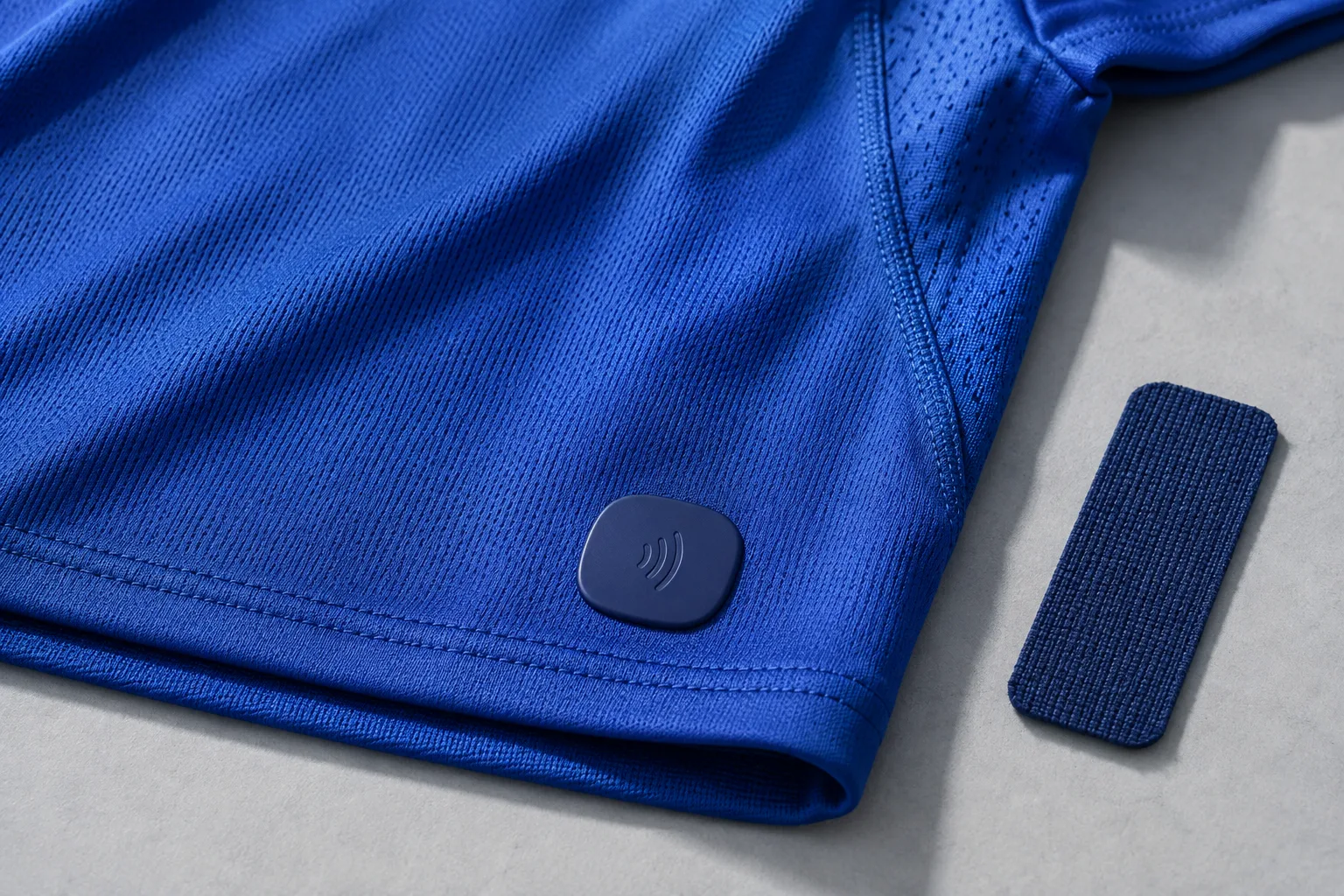
BrandGuard can develop heat-applied silicone badges or woven NFC patches, with custom shapes and personalised printing. The silicone NTAG 424 DNA format is one option; the broader garment badge range shows why NFC need not look like a separate piece of electronics.
A useful badge should feel at home on the shirt and be easy to find with a phone. It also needs to stay attached and readable through the garment's intended wear and care. Position, comfort and wash performance are assessed on finished samples—there is no single wash rating for every customised construction.
Give buying genuine a visible difference
A club is protecting its licensed merchandise. A sportswear brand is protecting the name on the garment. A specialist retailer is protecting the reputation that brings customers back. Their reasons differ, but each needs the genuine item to offer something more credible than a look-alike and a reassuring product description.
BrandGuard's role is to help make that difference checkable: a secure identity on the shirt, a verification result connected to the correct record, and a recognisable brand experience afterwards. Anti-counterfeiting gives the fan a reason to trust the purchase. Useful content and service give them a reason to keep the relationship.
Questions about NFC football shirt authentication
Is a replica football shirt a fake?
Not necessarily. In official sportswear ranges, replica commonly means a licensed fan version, distinct from the player-performance version. Both can be genuine. A counterfeit is an unauthorised product passed off as the club's or brand's merchandise; a seller using the word replica is not itself proof of authorisation.
Can someone copy an NFC badge and make a fake shirt pass?
Copying the artwork or a fixed NFC link is different from reproducing a properly configured secure tag's verification. NTAG 424 DNA adds cryptographically protected information that the service checks. Secure issuance and attachment still matter: moving a genuine badge or misrepresenting its product record is a separate risk.
Is this only for clubs, or can a football shirt shop use it?
Clubs, licensed brands and specialist retailers can each build an authentication experience around merchandise they issue or have properly authenticated. The page should identify who stands behind the record. A retailer's own branding does not automatically mean club authorisation.
Can the badge stay on the shirt after washing?
That is an intended use for a garment-integrated badge, but performance depends on its construction, attachment and care conditions. BrandGuard can assess silicone or woven formats on the chosen shirt. Confirm performance on finished samples rather than assuming all NFC badges share one wash rating.
Will an existing UHF inventory label do the same job?
A UHF-only inventory label is not read by a standard phone's NFC reader. It serves a different interaction from a fan's tap-to-verify badge. Both can be used on one garment, with their records linked where needed. UHF is not inherently disposable, and NFC is not inherently washable.
Sources and product information
- City of London Police — 2025 counterfeit football merchandise seizures
- MatchWornShirt — authentication with Fabricks
- NXP — NTAG 424 DNA data sheet
- RFIDTag — garment badges
- RFIDTag — NTAG 424 DNA silicone badge
- RFIDTag — UHF heat-press labels
- adidas — official football jerseys and replica terminology
Reviewed on 7 September 2026. RFIDTag and BrandGuard are ACCUZ® Industries brands. MatchWornShirt is cited as a separate industry example; its features are described in its own published information.